

Introduction
Viscose is one of the most widely used fabrics in modern fashion, yet it is also one of the most misunderstood.
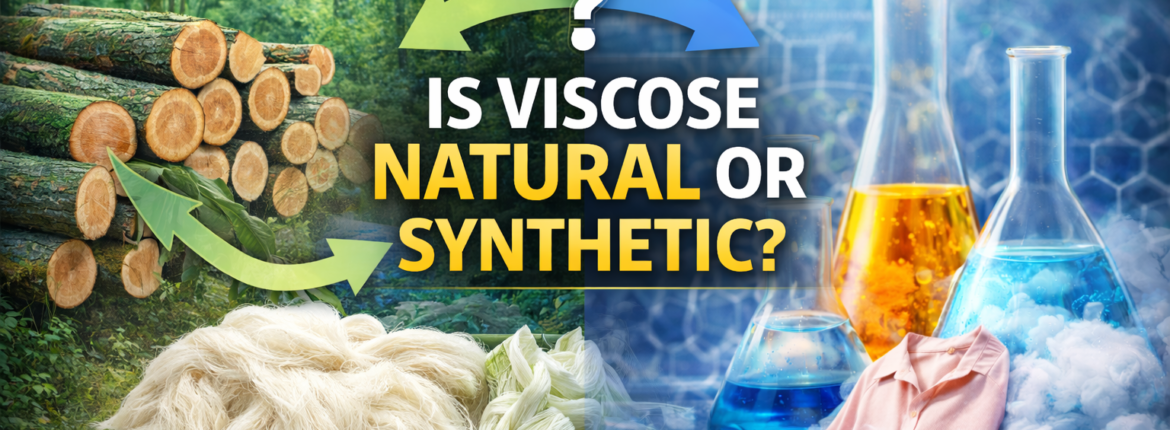
Many people consider viscose a natural fabric, while others classify it as synthetic. The truth lies somewhere in between.
This guide explains what viscose fabric is, how it is made, its properties, advantages, disadvantages, and whether it is a good choice for everyday clothing.
What Is Viscose Fabric?
Viscose is a semi-synthetic fabric made from natural raw materials such as wood pulp. It is processed chemically to create soft, smooth fibers that resemble natural fabrics like cotton or silk.
Because of this process, viscose is often referred to as a semi-synthetic or regenerated fiber.
Is Viscose Natural or Synthetic?
Viscose is not purely natural or fully synthetic.
- Raw material: Natural (wood pulp)
- Processing: Chemical
This makes viscose a semi-synthetic fabric, similar to modal and lyocell.
How Viscose Fabric Is Made
The manufacturing process involves several steps:
1. Raw Material Extraction
Wood pulp is extracted from trees such as bamboo, beech, or eucalyptus.
2. Chemical Processing
The pulp is dissolved using chemicals to create a viscous solution.
3. Fiber Formation
The solution is passed through spinnerets to form fibers.
4. Fabric Production
Fibers are spun into yarn and woven or knitted into fabric.
Properties of Viscose Fabric
Viscose is known for its unique characteristics:
- Soft and smooth texture
- Lightweight and breathable
- Good drape (flows well)
- Absorbs moisture effectively
- Silk-like appearance
Advantages of Viscose Fabric
Comfort
Viscose feels soft and comfortable on the skin, making it suitable for daily wear.
Breathability
It allows airflow and helps keep the body cool.
Affordable Alternative
Viscose is often used as a cheaper alternative to silk.
Versatility
Used in dresses, shirts, linings, and home textiles.
Disadvantages of Viscose Fabric
Despite its benefits, viscose has some limitations:
- Weak when wet
- Can shrink if not washed properly
- Requires careful handling
- Chemical processing impact
Is Viscose Safe for Skin?
Viscose is generally safe and comfortable for most people.
However:
- Low-quality viscose may contain chemical residues
- Sensitive skin may react in rare cases
Environmental Impact of Viscose
Viscose production has both positive and negative aspects:
Positive
- Made from natural sources
- Biodegradable under proper conditions
Negative
- Chemical-intensive production
- Can contribute to deforestation if not sourced responsibly
Viscose vs Cotton vs Polyester
| Feature | Viscose | Cotton | Polyester |
|---|---|---|---|
| Type | Semi-synthetic | Natural | Synthetic |
| Comfort | High | High | Medium |
| Breathability | High | High | Low |
| Durability | Medium | Medium | High |
For deeper comparison, explore related guides on Sapphire Stitching.
Cotton:https://sapphirestitching.com/what-is-cotton-fabric-types-benefits-how-it-is-made/
Polyester:https://sapphirestitching.com/why-should-we-avoid-polyester-must-read/
Common Uses of Viscose Fabric
Viscose is widely used in:
- Dresses and fashion wear
- Blouses and shirts
- Linings
- Scarves
- Home textiles
Technical Guide: Viscose Fabric Applications and Specifications
What Can Be Made from Viscose Fabric?
Viscose is a highly versatile fabric used across multiple product categories due to its softness and drape.
Common products made from viscose include:
- T-shirts and casual tops
- Dresses and fashion garments
- Lightweight shirts and blouses
- Loungewear and sleepwear
- Scarves and linings
- Knitwear fabrics
- Home textiles such as curtains and covers
Due to its smooth texture and breathability, viscose is especially suitable for summer and fashion-oriented garments.
Which Yarn Count Is Best for Viscose Fabric?
Yarn count plays a crucial role in fabric quality, thickness, and end use.
Common viscose yarn counts include:
- 20/1 Ne → Medium thickness, used for basic t-shirts and knitwear
- 24/1 Ne → Slightly finer, better for smoother fabric
- 30/1 Ne → Lightweight and softer, ideal for premium garments
- 40/1 Ne and above → Fine, used for high-end fashion and lightweight fabrics
For most commercial knitwear:
24/1 and 30/1 are considered ideal for viscose fabrics
GSM Calculation for Viscose Fabric (Important Insight)
Fabric GSM (grams per square meter) depends on:
- Yarn count
- Knitting structure
- Machine gauge
- Stitch length
If Using 20/1 Viscose Yarn
Typical GSM range:
- Single Jersey Fabric → 160–190 GSM
- Interlock Fabric → 190–230 GSM
This can vary based on knitting settings and finishing processes.
Expert Insight from Industry
As a textile manufacturer at Sapphire Stitching:
- Lower yarn count (like 20/1) → thicker, heavier fabric
- Higher yarn count (like 30/1 or 40/1) → finer, lighter, more premium feel
Selecting the right yarn count depends on:
- Target market (USA/EU prefer softer, lighter fabrics)
- Garment type
- Season (summer vs winter)
How to Identify Viscose Fabric
1. Feel
Soft, smooth, and slightly silky.
2. Appearance
Has a natural shine similar to silk.
3. Label Check
Look for:
- Viscose
- Rayon
Is Viscose a Good Fabric Choice?
Viscose is a good option if you are looking for:
- Soft and breathable fabric
- Affordable alternative to silk
- Lightweight clothing
However, it may not be the best choice for durability or heavy use.
Viscose Product:
Conclusion
Viscose is a versatile and widely used fabric that sits between natural and synthetic materials. It offers comfort and affordability but comes with certain limitations in durability and environmental impact.
Understanding viscose helps consumers make better fabric choices, especially in global markets where sustainability and comfort are becoming increasingly important.
