
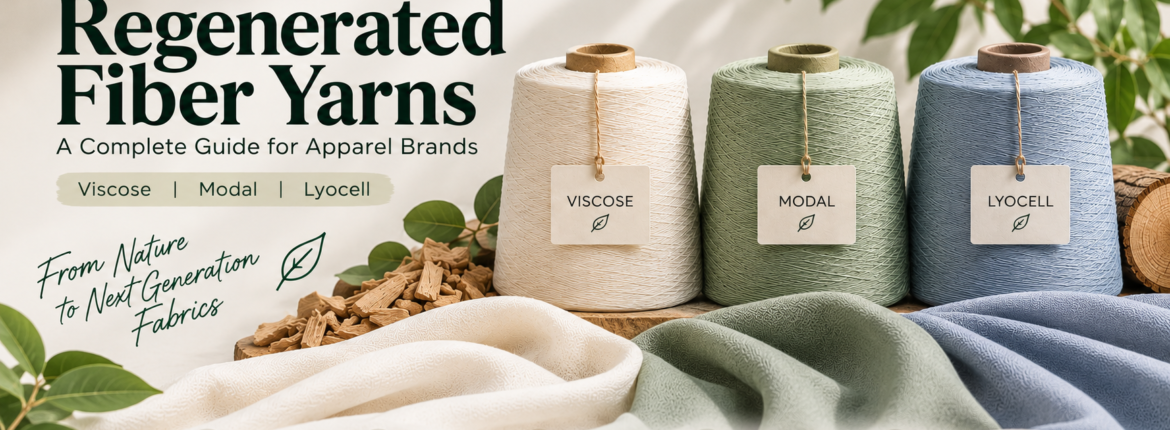
What Are Regenerated Fiber Yarns? A Complete Guide for Apparel Brands
When developing clothing, choosing the right yarn is one of the first decisions that can influence the final fabric’s softness, appearance, comfort, durability, drape, and performance.
Among the many yarn options available to textile manufacturers, regenerated fiber yarns have become an important category for modern apparel and textile production.
Regenerated fiber yarns are made from natural cellulose sources such as wood pulp or other plant-based materials that are processed and regenerated into usable fibers. These fibers can then be spun into yarns and used to create fabrics for clothing, home textiles, and other applications.
Common examples include viscose, modal, and lyocell.
But what exactly are regenerated fiber yarns, how are they different from natural and synthetic fibers, and which one is right for apparel?
Let’s explore.
What Are Regenerated Fiber Yarns?
Regenerated fiber yarns are yarns made from fibers that originate from natural cellulose but are transformed through a manufacturing process into fibers suitable for textile production.
Unlike cotton or linen, where the natural fiber can be spun into yarn after relatively limited processing, regenerated fibers require a chemical and mechanical process to transform cellulose into a form that can be regenerated into textile fibers.
The resulting fibers can then be:
Cellulose source → Fiber processing → Regenerated fiber → Spinning → Yarn → Fabric → Garment
This allows manufacturers to create fibers with specific characteristics such as softness, smoothness, absorbency, drape, and comfort. For reference https://www.globaltextiletimes.com/textile/textile-fiber-types-complete-guide-to-natural-synthetic-and-regenerated-fibers/
What Are Regenerated Fibers Made From?
Most regenerated cellulosic fibers begin with cellulose, a natural polymer found in plants.
Depending on the fiber and manufacturing process, cellulose may come from sources such as:
- Wood pulp
- Bamboo-derived cellulose
- Other plant-based cellulose sources
The cellulose is processed and converted into a solution or suitable form before being regenerated into continuous filaments or staple fibers.
These fibers are then cut or processed for spinning into yarn.
It is important to understand that plant-based does not automatically mean environmentally harmless. The environmental performance of a regenerated fiber depends on its raw material sourcing, chemicals, energy use, water management, recovery systems, and overall manufacturing process.
Natural vs Regenerated vs Synthetic Fibers
Natural Fibers
- Sourced directly from plants or animals.
- Common examples include cotton, linen, wool, and silk.
- Known for comfort, breath-ability, and a natural feel.
- Commonly used in everyday and premium apparel.
Regenerated Fibers
- Made from natural cellulose that is processed and regenerated into textile fibers.
- Examples include viscose, modal, and lyocell.
- Known for softness, smoothness, comfort, and excellent drape.
- Popular for dresses, tops, shirts, and loungewear.
Synthetic Fibers
- Manufactured from chemical polymers.
- Common examples include polyester, nylon, acrylic, and elastane.
- Known for strength, durability, stretch, and quick-drying properties.
- Widely used in sportswear, active-wear, and performance clothing.
Natural Fibers
Natural fibers are obtained directly from natural sources.
For example, cotton comes from the cotton plant, while wool comes from animals.
Regenerated Fibers
Regenerated fibers start with a natural raw material, usually cellulose, but the material is processed and regenerated into a new textile fiber.
Synthetic Fibers
Synthetic fibers are manufactured from polymers through chemical processes. Polyester and nylon are common examples used extensively in apparel.
Understanding this difference helps clothing brands make more informed choices when developing products.
Common Types of Regenerated Fiber Yarns
Several regenerated fibers are widely used in textile and apparel production.
1. Viscose Yarn
Viscose is one of the most widely known regenerated cellulosic fibers.
It is valued for its:
- Soft hand feel
- Smooth appearance
- Good drape
- Breath-ability
- Moisture absorbency
- Comfortable feel against the skin
Viscose yarn is commonly used in dresses, tops, shirts, skirts, lightweight garments, linings, and blended fabrics.
Its soft and flowing characteristics make it particularly useful for apparel where drape and comfort are important.
2. Modal Yarn
Modal is another regenerated cellulosic fiber known for its softness and smooth surface.
It is commonly associated with comfortable apparel and intimate clothing because of its soft hand feel.
Modal can offer:
- Excellent softness
- Smooth surface
- Good moisture management
- Comfortable wear
- Good color retention
- A soft drape
Modal yarn can be used in T-shirts, underwear, loungewear, sleepwear, active basics, and other garments where comfort is a priority.
3. Lyocell Yarn
Lyocell is a regenerated cellulosic fiber known for its soft feel, smooth appearance, and strong performance.
It is often selected for premium apparel because it can provide a combination of:
- Softness
- Breath-ability
- Moisture management
- Smooth texture
- Good drape
- Strength
Lyocell can be used in shirts, dresses, trousers, denim blends, casual-wear, and other fashion applications.
Viscose vs Modal vs Lyocell
Viscose
- Soft, smooth, and lightweight with excellent drape.
- Offers good breath-ability and moisture absorption.
- Commonly used for dresses, tops, shirts, and lightweight garments.
- A good choice when comfort and fluid drape are priorities.
Modal
- Known for its exceptionally soft and smooth feel.
- Comfortable and suitable for garments worn close to the skin.
- Offers good moisture management and color retention.
- Commonly used for T-shirts, underwear, loungewear, and sleepwear.
Lyocell
- Soft, smooth, and known for its comfortable hand feel.
- Offers good moisture management and breath-ability.
- Provides a premium look and attractive drape.
- Commonly used for shirts, dresses, trousers, and premium casual-wear.
Benefits of Regenerated Fiber Yarns
Regenerated fiber yarns can offer several advantages for apparel development.
Soft Hand Feel
Many regenerated cellulosic fibers are known for their smooth and comfortable feel.
This makes them suitable for garments worn directly against the skin.
Excellent Drape
Regenerated fibers can create fabrics with attractive drape and fluid movement.
This is particularly useful for:
- Dresses
- Blouses
- Shirts
- Skirts
- Lightweight trousers
- Fashion tops
Breath-ability
Cellulosic fibers can provide a comfortable balance of moisture absorption and breath-ability, depending on the fiber and fabric construction.
Comfortable for Everyday Apparel
Their soft hand feel makes many regenerated fibers suitable for everyday clothing, loungewear, underwear, and other comfort-focused products.
Versatile Blending
Regenerated fibers can also be blended with other fibers to create fabrics with a combination of properties.
For example, a regenerated fiber may be blended with cotton, polyester, elastane, or other fibers depending on the desired performance.
Are Regenerated Fibers Sustainable?
This is one of the most important questions for modern apparel brands.
Regenerated fibers are often discussed as alternatives to conventional textile fibers because many begin with renewable cellulose sources.
However, “regenerated” does not automatically mean “sustainable.”
Sustainability depends on several factors, including:
- Source of the cellulose
- Responsible forestry or raw material sourcing
- Chemical management
- Solvent recovery
- Water consumption
- Energy use
- Waste management
- Manufacturing technology
- Certifications and traceability
- End-of-life considerations
For this reason, brands should evaluate the specific fiber producer and supply chain rather than treating every regenerated fiber as environmentally equivalent.
What Is Regenerated Cellulose?
Regenerated cellulose refers to cellulose that has been processed and transformed into a new textile fiber.
The basic concept can be simplified as:
Natural cellulose → Processing → Regeneration → Textile fiber → Yarn → Fabric
This is different from simply spinning a natural fiber such as cotton.
The regeneration process gives manufacturers the ability to produce fibers with specific characteristics and performance requirements.
How Are Regenerated Fiber Yarns Made?
Although the exact process varies by fiber type, the general production sequence can be understood through several stages.
Step 1: Cellulose Sourcing
Cellulose is obtained from a suitable natural source.
Step 2: Cellulose Processing
The cellulose is processed to create a form that can be converted into textile fiber.
Step 3: Fiber Regeneration
The processed cellulose is transformed into filaments or staple fibers.
Step 4: Fiber Preparation
The fibers are cleaned, prepared, and processed according to their intended textile application.
Step 5: Spinning
Staple fibers can then be spun into yarn using appropriate spinning technology.
Step 6: Fabric Manufacturing
The yarn can be knitted or woven into fabric.
Step 7: Dyeing and Finishing
The fabric may undergo dyeing, finishing, and other treatments to achieve the required color, appearance, hand feel, and performance.
Step 8: Garment Manufacturing
Finally, the fabric is cut, stitched, finished, inspected, and prepared for delivery.
This shows why yarn selection is only one part of the complete apparel manufacturing process.
Where Are Regenerated Fiber Yarns Used?
Regenerated fiber yarns can be used across a wide range of textile products.
Apparel
- T-shirts
- Dresses
- Shirts
- Tops
- Skirts
- Trousers
- Lounge-wear
- Sleepwear
- Underwear
- Fashion basics
Active and Comfort Wear
Depending on the specific fiber and blend, regenerated fibers can also be used in comfort-focused and performance-inspired apparel.
Home Textiles
Some regenerated fibers are also used in selected home textile applications where softness and comfort are important.
How to Choose the Right Regenerated Fiber Yarn
For clothing brands, choosing a regenerated fiber should begin with the requirements of the final garment.
Consider the following:
1. Garment Type
A flowing dress may require different yarn characteristics than a structured T-shirt or performance garment.
2. Hand Feel
Decide whether the garment should feel soft, smooth, cool, substantial, or lightweight.
3. Drape
For dresses, skirts, blouses, and flowing silhouettes, drape can be particularly important.
4. Strength and Durability
Consider how frequently the garment will be worn and washed.
5. Moisture Management
For everyday and comfort garments, moisture management can influence wearer comfort.
6. Fabric Construction
The same fiber can behave differently depending on whether it is knitted or woven and how the fabric is constructed.
7. Blending Requirements
A blend may provide characteristics that a single fiber cannot provide alone.
8. Cost
Yarn selection should fit the target product cost and positioning of the clothing brand.
9. Sustainability Requirements
If sustainability is part of the brand’s positioning, investigate the specific fiber source, manufacturing process, certifications, and supply-chain information.
Regenerated Fiber Yarns in Apparel Manufacturing
For clothing brands, yarn selection should be considered early in product development.
A typical development specification may include:
Fiber → Yarn → Fabric Construction → GSM → Width → Color → Finish → Garment
This is where yarn selection connects directly with fabric development and garment manufacturing.
For example, the final fabric’s GSM can influence garment weight, feel, structure, warmth, and material consumption. You can learn more about this in our guide on How GSM Affects Clothing Quality, Weight & Performance.
Brands developing seasonal collections can also compare regenerated fibers with other fabric options depending on the intended garment, climate, and target customer.
Why Yarn Quality Matters
The quality and consistency of yarn can influence the final fabric and garment.
Important factors can include:
- Yarn count
- Fiber quality
- Yarn strength
- Evenness
- Hairiness
- Twist
- Spinning quality
- Color consistency
- Blend composition
Consistent yarn helps manufacturers achieve more consistent fabric production.
This is particularly important for brands producing repeated styles or large collections where consistency between production batches matters.
Regenerated Fiber Yarns and Fabric Dyeing
Yarn and fiber selection can also influence the appearance and performance of dyed fabrics.
Different fibers have different dye affinities and processing requirements. Therefore, dye selection and dyeing conditions need to be matched with the fiber composition.
This is one reason why fabric development should consider fiber composition, yarn construction, dyeing, and finishing together rather than treating each stage independently.
For brands interested in the wider textile manufacturing process, Sapphire Stitching provides integrated services covering knitting, dyeing, cutting, stitching, printing, embroidery, finishing, quality control, and packaging.
Regenerated Fiber Yarns for Sustainable Apparel Brands
For brands developing sustainability-focused collections, regenerated cellulosic fibers can be an interesting option.
However, responsible sourcing requires more than simply selecting a fiber category.
Brands should ask:
- Where does the cellulose come from?
- Is the raw material responsibly sourced?
- What production process is used?
- How are chemicals managed?
- Are solvents recovered?
- What certifications are available?
- Can the fiber be traced through the supply chain?
- Does the fabric meet the brand’s performance requirements?
These questions help brands make more informed sourcing decisions.
Final Thoughts
Regenerated fiber yarns have become an important part of modern textile and apparel development.
Fibers such as viscose, modal, and lyocell can offer desirable characteristics including softness, comfort, drape, breath-ability, and versatility.
However, choosing the right regenerated fiber is not simply about selecting the softest or most sustainable-sounding option. The right choice depends on the garment, fabric construction, yarn specifications, performance requirements, target price, and supply-chain expectations.
For apparel brands, understanding the journey from fiber to yarn, yarn to fabric, and fabric to finished garment makes it easier to develop products with consistent quality and the right performance.
At Sapphire Stitching, we understand apparel production as a connected process—from yarn and fabric development to dyeing, cutting, stitching, printing, finishing, quality control, and packaging. Our integrated approach helps brands develop garments according to their design and production requirements.
Explore our complete apparel manufacturing services or learn more about our garment manufacturing capabilities.
Related Articles
