
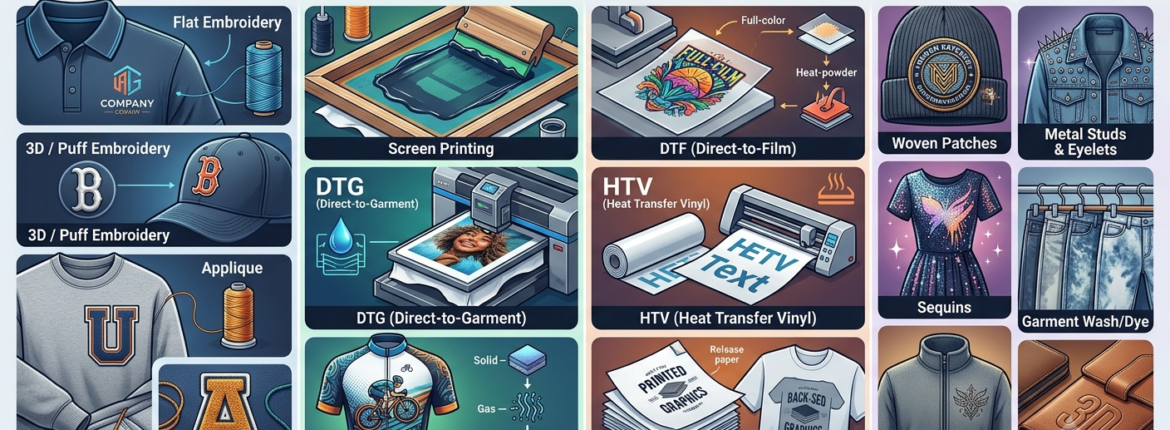
To keep it simple, we can break it down into four main buckets: Embroidery (stitching with thread), Printing (applying ink directly), Transferring (sticking a pre-made design on using heat), and Other Decorations (adds-ons like patches, washes, or hardware).
Here is the ultimate guide broken down in simple, lay-man terms.
1. Embroidery (Stitching with Thread)
Embroidery uses needles and thread to physically sew a design into the fabric. It offers a premium look, feels textured, and lasts forever.
-
Flat Embroidery: The standard method. The thread sits flat against the fabric. You see this on most corporate polo shirts, school uniforms, and left-chest logos.
-
3D / Puff Embroidery: A piece of foam is placed on the fabric before stitching. The machine sews over the foam, trapping it inside and making the design literally pop out. Commonly used on snapback caps and heavy hoodies.
-
Applique: Instead of filling a massive logo entirely with thread (which gets heavy and stiff), a piece of fabric is cut into the shape of the logo and sewn down onto the garment. Think of classic vintage university sweatshirts.
-
Chenille Embroidery: Uses a special loop stitch that creates a fluffy, fuzzy texture that feels like a towel or a rug. Classic look for high school varsity letterman jackets.
2. Garment Printing (Applying Ink Directly)
Printing involves applying liquid inks directly onto the fabric surface or soaking it into the fibers.
-
Screen Printing: The undisputed king of commercial printing. Ink is pushed through a woven mesh stencil (a screen) onto the fabric. It requires making a separate screen for every color in the design. It is incredibly durable and cost-effective for large production runs.
-
Direct-to-Garment (DTG): Think of this like a giant, high-tech inkjet printer, but for clothes. The garment goes on a tray, and the machine prints highly detailed, full-color images (like photos) directly onto the cotton fibers. Perfect for complex artwork but best for small quantities.
-
Sublimation Printing: A chemical process where specialized ink is heated until it turns directly from a solid into a gas, bonding permanently inside the fabric fibers rather than sitting on top. It never cracks or peels, but it only works on polyester fabrics (usually white or light colors). Standard for sports jerseys.
3. Transferring (Heat-Pressed Graphics)
Transferring involves printing a design onto a special carrier sheet or film first, then using a commercial heat press machine to melt and fuse that design onto the garment.
-
-
Direct-to-Film (DTF) Transfers: The most popular modern transfer method. A digital printer prints the design onto a clear plastic film and applies a heat-activated glue powder to the back. It is then pressed onto the garment. It works on almost any fabric type or color and handles ultra-fine details excellently.
-
Heat Transfer Vinyl (HTV): A machine cuts shapes out of a solid sheet of colored rubberized vinyl, the excess is peeled away, and the remaining design is ironed onto the shirt. Great for names and numbers on sports uniforms.
-
Plastisol Transfers: Essentially a screen-printed design printed backward onto special release paper. You stock up on the paper transfers, and when a customer orders, you heat-press it onto the shirt in 10 seconds.
-
4. Other Types of Garment Decoration
If you aren’t sewing or printing, there are dozens of other ways brands add style, texture, and value to clothing.
Attached Elements
-
Patches (Woven, Leather, or PVC): Instead of embroidering directly onto the garment, the patch is made separately and then stitched or glued on. Rubberized PVC and embossed faux-leather patches are highly popular for a modern look on jackets, beanies, and jeans.
-
Rhinestones, Studs, & Eyelets: Metal studs, grommets, or shiny crystals pressed mechanically into the fabric for a streetwear or luxury aesthetic.
-
Sequins: Tiny, shiny plastic disks sewn onto the fabric. They can be sewn flat or loosely so they flip over to change color when brushed.
Fabric Alterations
-
Garment Dyeing & Washing: Dyeing the finished stitched item instead of the raw fabric roll. This includes processes like Acid Wash, Stone Wash (using pumice stones to distress denim/fleece), or Tie-Dye to give garments a soft, broken-in, vintage feel.
-
Laser Etching / Engraving: A precise laser burns away the top layer of fabric fibers (very popular on denim or fleece) to create a subtle, permanent, darker-toned design without using any ink or thread.
-
Embossing / Debossing: Using a heated metal mold under high pressure to physically stamp a raised (embossed) or recessed (debossed) 3D pattern directly into fabrics like velvet, fleece, or suede.
