

Introduction
Cotton is one of the most widely used and trusted fabrics in the world. Known for its softness, breathability, and comfort, cotton fabric is a staple in everyday clothing across the USA, Europe, and global markets.
From basic t-shirts to premium garments, cotton plays a key role in the textile industry. This guide explains what cotton fabric is, how it is made, its types, benefits, and how to identify high-quality cotton.
What Is Cotton Fabric?
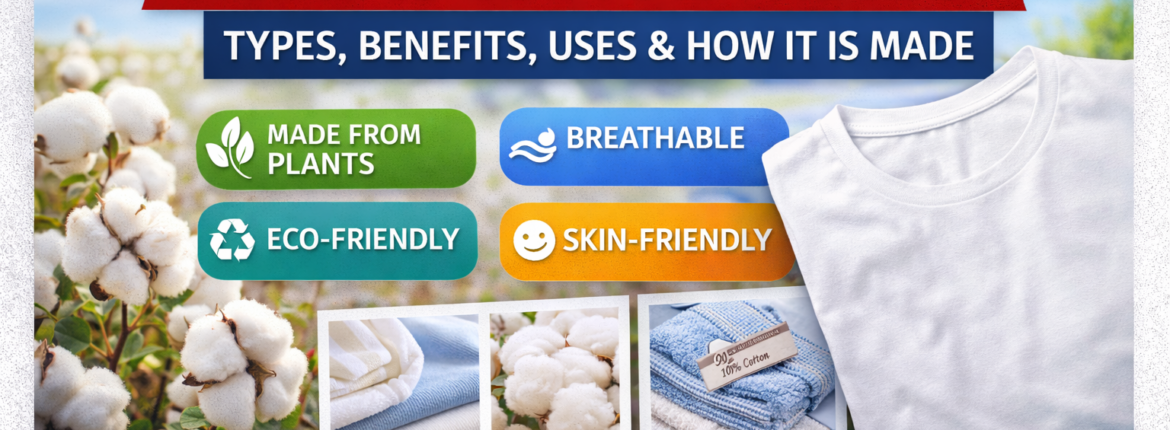
Cotton fabric is a natural textile made from the fibers of the cotton plant. These fibers are soft, fluffy, and primarily composed of cellulose, making them highly breathable and comfortable for daily wear.
Cotton is especially popular in warm climates because it allows air circulation and absorbs moisture effectively.
How Cotton Fabric Is Made
The journey from plant to fabric involves several steps:
1. Harvesting
Cotton fibers are picked from cotton plants, either manually or by machines.
2. Ginning
Seeds are removed from the cotton fibers to clean and prepare them.
3. Spinning
Fibers are spun into yarn or thread.
4. Weaving or Knitting
Yarn is converted into fabric using weaving or knitting techniques.
5. Dyeing and Finishing
The fabric is dyed, treated, and finished to improve softness, durability, and appearance.
Types of Cotton Fabric
Cotton is not a single type of fabric. It comes in multiple variations:
1. Regular Cotton
Basic cotton used in everyday clothing.
2. Organic Cotton
Grown without harmful chemicals, making it eco-friendly and safer for skin.
3. Combed Cotton
Processed to remove impurities, resulting in smoother and stronger fabric.
4. Egyptian Cotton
Known for long fibers, premium softness, and durability.
5. Pima Cotton
High-quality cotton with extra-long fibers, often used in luxury garments.
Properties of Cotton Fabric
Cotton fabric is valued for its natural performance characteristics:
- High breathability
- Soft texture
- Moisture absorption
- Skin-friendly
- Biodegradable
As a garment manufacturer at Sapphire Stitching, cotton remains one of the most preferred materials for producing comfortable and high-quality garments.
Advantages of Cotton Fabric
Cotton offers several benefits for daily wear:
Comfort
Soft and gentle on the skin, making it ideal for long-term wear.
Breathability
Allows air circulation, reducing heat and sweat buildup.
Hypoallergenic
Suitable for sensitive skin and reduces irritation.
Eco-Friendly
Being a natural fiber, cotton is biodegradable.
Versatility
Used in a wide range of products from casual wear to home textiles.
Disadvantages of Cotton Fabric
Despite its benefits, cotton has some limitations:
- Wrinkles easily
- May shrink after washing
- Less durable compared to synthetic fabrics
- Can take longer to dry
Common Uses of Cotton Fabric
Cotton is used in a variety of products:
- T-shirts and casual wear
- Underwear and inner garments
- Bed sheets and home textiles
- Baby clothing
- Summer wear
Ivie Organic Luxury Cotton Batting Fiber (1 lb)
- Organic cotton batting for stuffing and crafts
- Natural white color, soft and warm texture
- Weight: 1 lb (approx. 450 grams)
- Eco-friendly and skin-safe material
- Ideal for pillows, dolls, and DIY projects
- Combed cotton for better quality and smoothness
How to Identify High-Quality Cotton
Choosing the right cotton fabric is important for quality and durability.
1. Fabric Feel
High-quality cotton feels soft and smooth.
2. Breathability Test
Cotton allows air to pass easily.
3. Label Check
Look for:
- 100% Cotton
- Organic Cotton
4. GSM (Fabric Weight)
- 140–160 GSM: Lightweight (summer)
- 160–180 GSM: Standard t-shirts
- 180+ GSM: Premium and durable
https://sapphirestitching.com/fabric-gsm-guide-why-fabric-weight-matters-in-apparel/
Cotton vs Polyester (Quick Comparison)
| Feature | Cotton | Polyester |
|---|---|---|
| Breathability | High | Low |
| Comfort | High | Medium |
| Durability | Medium | High |
| Eco-Friendly | Yes | No |
Cotton is better for comfort, while polyester is better for durability.
Is Cotton Sustainable?
Cotton is more sustainable than synthetic fabrics, but it still requires water and proper farming practices.
Organic cotton and responsible sourcing improve sustainability significantly. According to World Population Review The top cotton producing countries are:


Conclusion
Cotton remains one of the most reliable and widely used fabrics in the world. Its comfort, breathability, and natural properties make it ideal for everyday clothing.
Understanding different types of cotton and their qualities helps consumers make better purchasing decisions, especially in global markets where quality and sustainability are increasingly important.
